Cat’s Claw Creeper Plant Care Guide: A Fast-Growing Yellow Climber for Indian Gardens
There’s something truly enchanting about a vibrant flowering vine adorning a garden wall or a sturdy trellis. Among the many beautiful options, the Cat’s Claw Creeper Plant stands out as a beloved choice for Indian homes and gardens. Its dazzling yellow trumpet-shaped flowers bring a burst of sunshine, and its vigorous climbing habit makes it a favourite for quickly transforming dull spaces into lush, green canvases. For gardeners across India, whether seasoned or just starting, this plant offers a rewarding experience with relatively low maintenance.
At nonviableliving, the online plant platform by Wynorg, a trusted Indian brand known for delivering healthy live plants safely across India, we understand the joy and challenges of nurturing plants. That’s why we’ve put together this comprehensive guide on caring for the Cat’s Claw Creeper Plant, ensuring you have all the knowledge to help your plant thrive and bring spectacular beauty to your outdoor spaces.
Botanical Overview
The Cat’s Claw Creeper, known botanically as Dolichandra unguis-cati, is a fascinating member of the Bignoniaceae family, which is famous for its many showy flowering vines. Originally hailing from the tropical and subtropical regions of America, this plant has found a welcoming home in the diverse climates of India. It’s a perennial, woody climber that gets its common name from the distinctive, claw-like tendrils it uses to cling to surfaces. These tendrils, resembling a cat’s claw, are incredibly effective, allowing it to scale walls, fences, and trees with remarkable speed. With a vigorous growth habit, this fast-growing fence plant can reach impressive heights of 10 to 20 feet, creating dense screens of foliage and flowers, making it an excellent yellow flowering vine for rapid coverage.
Why People Love This Plant
The Cat’s Claw Creeper Plant captivates gardeners for several compelling reasons, making it one of the most sought-after climber plants in India.
Appearance
Its striking appearance is undoubtedly its biggest draw. The plant forms a thick curtain of lush, green foliage, providing a beautiful backdrop for its star performers – the flowers.
Flowers
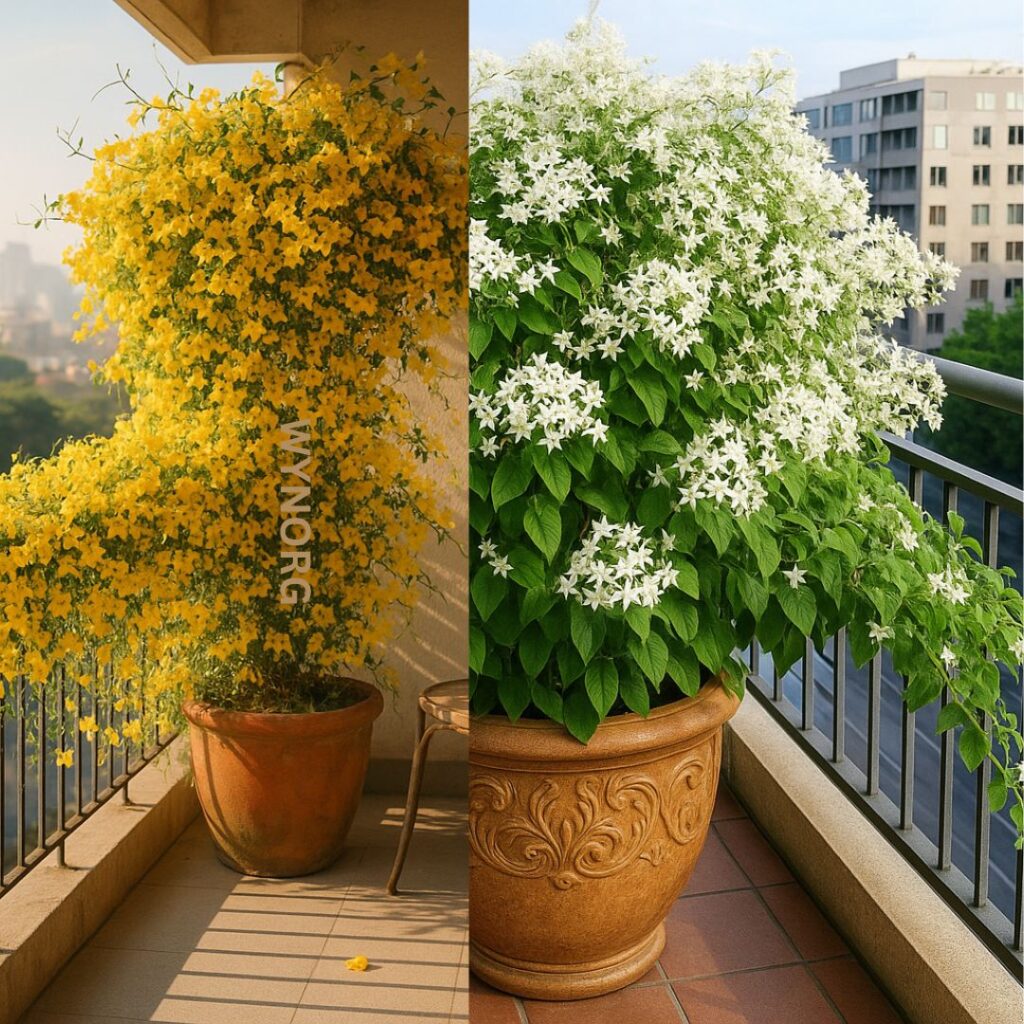
Come spring and summer, the plant erupts in a spectacular display of bright yellow, trumpet-shaped flowers. These cheerful blooms, often appearing in clusters, create a vibrant tapestry that can brighten any corner of the garden. The sheer abundance of flowers can be breathtaking, turning an ordinary wall into a golden cascade.
Foliage
The foliage of the Cat’s Claw Creeper is evergreen, meaning it retains its leaves throughout the year. This ensures continuous green cover, even when not in bloom, adding year-round structure and beauty to your landscape. The glossy, dark green leaves provide a dense, attractive screen.
Fragrance
While the Cat’s Claw Creeper is not known for its fragrance, its visual impact more than compensates. The vibrant colours are a feast for the eyes, even without a scent.
Decorative Value
Its primary decorative value lies in its ability to quickly cover large areas. Whether you have an unsightly wall, a bare fence, a sturdy trellis, or a pergola that needs some green, the Cat’s Claw Creeper is an unparalleled choice. It creates a living screen, adding privacy, beauty, and a touch of the tropics to your outdoor living spaces. Its robust nature makes it perfect for creating a dramatic statement in any Indian garden.
Growing Requirements
To ensure your Cat’s Claw Creeper Plant flourishes, understanding its basic needs is crucial. These requirements are straightforward, making it an easy-care plant for many gardeners.
Light
The Cat’s Claw Creeper thrives in full sun. For the best flowering performance and vigorous growth, aim to provide at least 6-8 hours of direct sunlight per day. While it can tolerate partial shade, too little sun will result in sparse flowering and less robust growth.
Water
This plant prefers moderate watering. It’s essential to allow the top inch or two of soil to dry out between waterings, especially in established plants. Overwatering, particularly in poorly draining soil, can lead to root rot. During the peak growing and flowering seasons (spring and summer), it may require more frequent watering, while in cooler months, reduce the frequency.
Temperature
Being native to tropical and subtropical regions, the Cat’s Claw Creeper is well-suited to the warm temperatures prevalent across much of India. It can tolerate a wide range of temperatures but prefers warmer climates. It is sensitive to extreme frost, though this is rarely a concern in most parts of India.
Humidity
The plant adapts well to typical Indian humidity levels. No special humidity adjustments are usually needed for outdoor growing.
Soil
Well-drained soil is paramount for the health of your Cat’s Claw Creeper. It can tolerate various soil types, including sandy, loamy, or clayey soils, as long as they drain well. Heavy, waterlogged soils are detrimental and can lead to problems like root rot.
Potting Mix
If growing in a large pot, use a high-quality potting mix designed for outdoor plants, ensuring it offers excellent drainage. You can amend it with perlite or coarse sand to improve drainage further. Remember, even in pots, this plant needs ample space and support.
Fertilizer
The Cat’s Claw Creeper is not a heavy feeder, but a balanced, slow-release granular fertilizer applied once in spring can promote vigorous growth and abundant flowering. Alternatively, a liquid feed every 4-6 weeks during the growing season (spring to early autumn) can be beneficial. Avoid over-fertilizing, as this can lead to excessive foliage growth at the expense of flowers.
How to Care for This Plant
Caring for your Cat’s Claw Creeper Plant is relatively straightforward once you understand its needs. Here’s a practical, step-by-step guide for Indian conditions:
- Choosing the Right Spot: Select a location that receives full sun for most of the day. Ensure there’s a sturdy support structure nearby for the plant to climb, such as a strong wall, fence, pergola, or large trellis. Consider its fast-growing nature and potential invasiveness when choosing a planting spot, especially near delicate structures.
- Planting: Dig a hole twice as wide as the root ball and just as deep. Gently remove the plant from its nursery pot, loosen any circling roots, and place it in the hole. Backfill with well-draining soil, ensuring the plant is at the same level as it was in the nursery pot. Water thoroughly after planting.
- Providing Support: From the beginning, guide the young tendrils towards their support structure. The claw-like tendrils will naturally grip and climb. For smooth surfaces, you might need to initially provide some ties until it establishes itself.
- Watering Schedule: Water regularly, but moderately. Check the soil moisture before watering again. During the hot Indian summers, you might need to water more frequently, while in the cooler months, watering can be significantly reduced. Always ensure good drainage to prevent waterlogging.
- Pruning for Control and Health: Pruning is essential for the Cat’s Claw Creeper, primarily to manage its vigorous growth and to encourage bushier growth and more flowers. The best time to prune is after the main flowering season, usually in late summer or early autumn.
- Maintenance Pruning: Remove any dead, diseased, or damaged branches.
- Shape and Size Control: Cut back long, unruly shoots to maintain the desired size and shape. You can cut back older, woody stems to promote new, more floriferous growth.
- Containment: Due to its fast growth and potential invasiveness, regular pruning is key to preventing it from spreading into unwanted areas, such as roof tiles or gutters.
- Fertilization: As mentioned, a light feeding in spring will suffice. Over-fertilizing can lead to excessive leafy growth at the expense of blooms.
- Seasonal Care: In most parts of India, the Cat’s Claw Creeper is quite resilient. In areas that experience very dry spells, ensure adequate watering. Protect young plants from extreme cold if temperatures dip unusually low, though mature plants are generally hardy.
Common Problems and Solutions
While the Cat’s Claw Creeper is generally easy to care for, like any plant, it can encounter a few issues. Understanding these common problems and their solutions will help keep your plant healthy and vibrant.
- Yellow Leaves:
- Cause: Often a sign of overwatering or poor drainage, leading to root rot. It can also indicate a nutrient deficiency, though less common with this plant.
- Solution: Check your watering schedule and soil drainage. Allow the soil to dry out between waterings. Ensure your pot has drainage holes, or amend garden soil to improve drainage. If drainage is good, consider a balanced liquid fertilizer.
- Pests:
- Cause: Generally, Cat’s Claw Creeper is quite resistant to serious pest problems. However, it can occasionally be affected by common garden pests like aphids or mealybugs, especially on new growth.
- Solution: For minor infestations, a strong spray of water can dislodge pests. For more persistent issues, use an organic insecticidal soap or neem oil spray, applying it thoroughly to all affected parts of the plant.
- Fungal Diseases (e.g., Root Rot):
- Cause: Almost always due to waterlogged soil and overwatering, which creates an anaerobic environment where fungi thrive.
- Solution: The best prevention is good drainage and proper watering. If root rot is suspected (wilting despite moist soil, yellowing leaves), carefully unpot or expose the roots, trim off any mushy, dark roots, and repot in fresh, well-draining soil.
- Poor Flowering:
- Cause: Insufficient sunlight is the most common reason. Other causes can include excessive nitrogen fertilizer (which promotes leaf growth over flowers) or improper pruning (pruning too late in the season, removing flower buds).
- Solution: Ensure the plant receives at least 6-8 hours of full sun daily. Use a balanced fertilizer or one slightly higher in phosphorus to encourage blooms. Prune only after the main flowering period.
- Slow Growth:
- Cause: Often linked to insufficient sunlight, poor soil quality, or lack of nutrients.
- Solution: Relocate to a sunnier spot if possible. Improve soil with organic compost and provide a balanced fertilizer during the growing season.
- Leaf Drop:
- Cause: Can be a reaction to sudden environmental changes, such as extreme temperature fluctuations, severe under-watering leading to drought stress, or severe overwatering leading to root issues.
- Solution: Assess recent changes in the environment or watering habits. Address watering issues promptly. The plant usually recovers once conditions stabilize.
- Can Become Invasive:
- Cause: Its vigorous growth and efficient climbing tendrils, combined with its ability to produce many seeds, can lead to it spreading aggressively and potentially outcompeting native vegetation in certain environments.
- Solution: Regular, diligent pruning is crucial to control its spread. Avoid planting it directly near native bushland or sensitive ecological areas. If planting in a garden, ensure it has defined boundaries and be prepared for ongoing management. Always remove any seed pods before they mature and disperse seeds.
Benefits
Beyond its visual appeal and easy care, the Cat’s Claw Creeper Plant offers several practical benefits for your home and garden.
- Home Decoration: It excels at providing fast coverage for unsightly walls, fences, or old structures, transforming them into beautiful green backdrops. Its vibrant yellow flowers add a cheerful touch to any landscape design.
- Balcony Gardening: While it prefers to spread, with a large, sturdy pot and a strong support structure, it can be managed on a spacious balcony, bringing a touch of the wild to urban settings.
- Landscaping: Ideal for creating living screens, adding privacy, or defining garden spaces. It’s a superb choice for pergolas and large trellises, offering both shade and beauty.
- Pollinator Friendly: The bright, trumpet-shaped flowers are a magnet for local pollinators, especially butterflies, adding life and movement to your garden ecosystem.
Frequently Asked Questions
Here are some common questions about the Cat’s Claw Creeper Plant:
Does it damage walls? Can it grow in pots? Is it evergreen?
Yes, its strong tendrils can grip rough surfaces quite effectively, so it’s wise to avoid delicate or freshly painted walls where its adherence might cause damage over time. It can indeed grow in pots, but it will need a very large, sturdy container and a robust support system like a trellis within the pot. And yes, it is an evergreen plant, retaining its lush green leaves year-round, which makes it an excellent choice for continuous coverage.
What is the growth rate?
The Cat’s Claw Creeper is known for its exceptionally fast growth rate. Under optimal conditions with plenty of sunlight and adequate moisture, it can easily grow up to 10 feet or more in a single year, quickly covering large areas and establishing itself as a dominant feature in your garden.
Final Thoughts
The Cat’s Claw Creeper Plant, with its stunning yellow flowers and vigorous climbing habit, is a truly rewarding addition to any Indian garden. Its ability to quickly green up a space, coupled with its relatively low maintenance needs, makes it a fantastic choice for both novice and experienced gardeners. Remember to provide it with ample sunlight, moderate water, and consistent pruning to keep its growth in check and ensure a spectacular display year after year. Embrace its beauty responsibly, and it will repay you with a golden cascade of blooms.
We hope this guide has equipped you with the confidence and knowledge to successfully grow and enjoy this magnificent yellow flowering vine. For more practical growing advice, to discover a wide variety of quality plants, and to find trusted nursery sourcing, explore the other plant guides on nonviableliving. nonviableliving is the online plant platform from Wynorg, helping plant lovers across India discover quality plants, practical growing advice, and trusted nursery sourcing, ensuring your gardening journey is always a blooming success.
Image by: aboodi vesakaran
https://www.pexels.com/@aboodi