Petrea Purple Wreath Vine – Queen’s Wreath Climber | Wynorg Nursery
There are few sights more captivating in an Indian garden than a vibrant flowering vine, and among them, the Petrea Purple Wreath Vine stands out as a true spectacle. Known for its breathtaking cascades of star-like purple flowers, this magnificent climber brings an unparalleled charm and elegance to any outdoor space. It’s a favourite for many gardening enthusiasts, transforming ordinary walls, arbors, and trellises into artistic masterpieces of nature.
Its enchanting blooms, reminiscent of wisteria, coupled with its relatively easy care, make it a beloved choice for Indian homes and gardens alike. Whether you’re a seasoned gardener looking for a stunning addition or a beginner hoping to introduce dramatic beauty to your landscape, the Purple Wreath Vine is an excellent choice. nonviableliving is the online plant platform by Wynorg, a trusted Indian brand known for delivering healthy live plants safely across India. We’re here to help you unlock the full potential of your Petrea Purple Wreath Vine and enjoy its splendid display for years to come.
Botanical Overview
The Petrea Purple Wreath Vine, also affectionately known as Queen’s Wreath, is a botanical marvel. Its formal botanical name is Petrea volubilis, belonging to the Verbenaceae family, which also includes plants like Verbena and Lantana. This tropical beauty originates from the warm climates of Central and South America, thriving naturally in areas with ample sunlight and humidity.
As a vigorous climbing plant, the Petrea volubilis is characterized by its woody stems that seek support to ascend. It’s a flowering vine that can reach impressive heights of 15-25 feet (4.5 to 7.5 meters) or even more in ideal conditions, creating a dense canopy of foliage and flowers. Its growth habit allows it to gracefully drape over structures, making it an excellent choice for vertical gardening and adding a dramatic vertical element to your garden.
Why People Love This Plant
The Petrea Purple Wreath Vine captures hearts with its unique charm and spectacular display. Here’s why this purple flowering climber is so adored:
Appearance
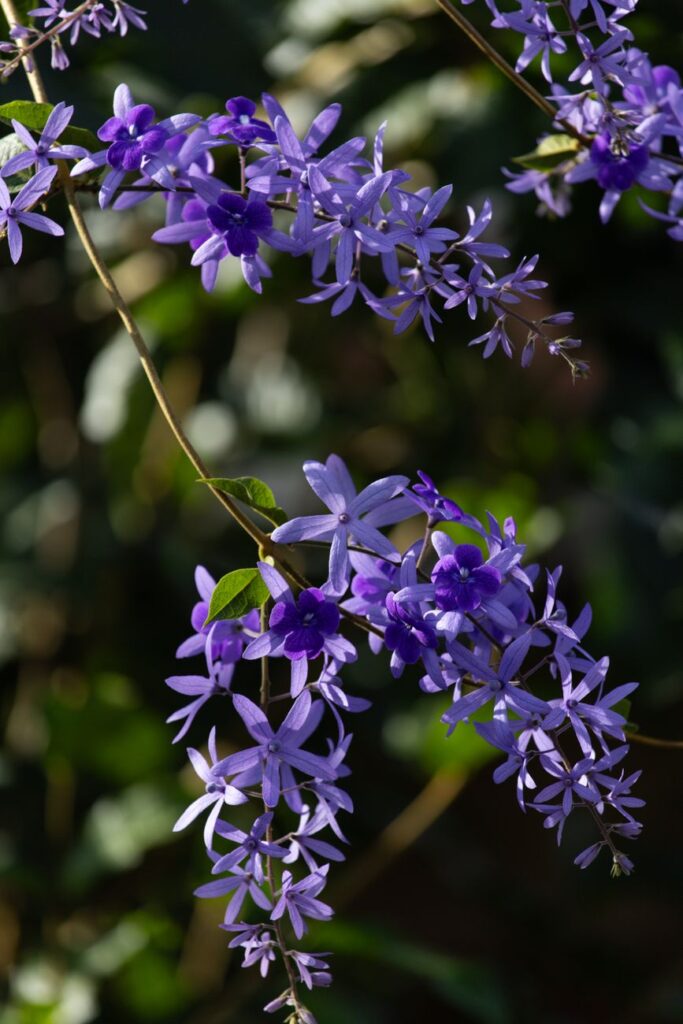
The true magic of the Queen’s Wreath lies in its stunning visual appeal. It produces long, cascading clusters of star-like flowers, often described as resembling the beloved wisteria, but with a unique Indian flair. The rough-textured leaves provide a robust green backdrop, staying evergreen in warm climates, ensuring a lush look even when not in bloom.
Flowers
The flowers are undoubtedly the main attraction. Each ‘flower’ is actually composed of two parts: a small, true flower with five petals, surrounded by five prominent, persistent sepals that resemble petals. It’s these sepals that give the vine its iconic purple, star-like appearance and create the long, pendulous racemes that are so eye-catching. The flowering season typically spans from spring to summer, often reblooming throughout warmer months, providing an extended period of breathtaking colour.
Foliage
While the flowers steal the show, the foliage of the Petrea volubilis is equally important. The leaves are typically rough to the touch, hence the common name “Sandpaper Vine” in some regions. In India’s warm climate, these leaves remain evergreen for most of the year, offering a consistent green canvas that beautifully highlights the vibrant purple blooms.
Fragrance
Unlike some highly fragrant climbers, the Petrea Purple Wreath Vine offers a mild, subtle fragrance. It’s not overpowering, but rather a gentle aroma that adds to the overall pleasant garden experience, especially during its peak bloom.
Decorative Value
The decorative potential of this plant is immense. Its climbing habit makes it ideal for enhancing various garden structures. Imagine a grand arbor draped in a profusion of purple blossoms, or a pergola transformed into a tunnel of living colour. It’s also excellent for covering large trellises, fences, or even camouflaging unsightly walls or structures, turning them into focal points of beauty. For those with larger spaces, it can even be trained to ascend and beautify a dead tree trunk, giving it a new lease on life with vibrant purple hues.
Growing Requirements
To ensure your Petrea Purple Wreath Vine thrives and blesses you with abundant blooms, understanding its specific growing requirements is key:
Light
The Purple Wreath Vine is a sun-worshipper. For optimal flowering, it absolutely needs full sun. This means at least 6-8 hours of direct sunlight per day. While it can tolerate partial shade, insufficient light will result in sparse flowering and weaker growth. In the intense Indian summer, morning sun with some afternoon shade can be beneficial in extremely hot regions, but generally, full sun is preferred.
Water
This vine prefers moderate watering. It’s crucial to water deeply but infrequently, allowing the topsoil to dry out completely between waterings. Once established, the Queen’s Wreath becomes remarkably drought tolerant, making it a robust choice for varied Indian conditions. During its active growth and flowering periods, ensure consistent moisture without waterlogging. Reduce watering significantly in cooler, dormant months.
Temperature
Hailing from tropical regions, the Petrea volubilis thrives in warm temperatures. It is well-suited to the Indian climate, preferring temperatures above 15°C (60°F). It can tolerate short periods of cooler temperatures but is not frost-hardy. In regions experiencing mild winters, it will continue to flourish, while in areas with slightly colder winters, it might shed some leaves but usually bounces back vigorously in spring.
Humidity
As a tropical plant, the Purple Wreath Vine appreciates high humidity but adapts well to average Indian humidity levels. No special measures are usually needed to increase humidity for outdoor plants.
Soil
Good drainage is paramount for this plant. It prefers a fertile, well-draining soil mix. While it can tolerate a range of soil types, sandy loam enriched with organic matter provides the best growing medium. A slightly acidic to neutral pH (6.0 to 7.0) is generally ideal.
Potting Mix
If you’re growing your Petrea in a pot, use a high-quality potting mix that offers excellent drainage. A mix containing cocopeat, garden soil, and perlite or sand in equal proportions, along with some well-rotted compost, will work wonders. Ensure the pot has ample drainage holes.
Fertilizer
Feed your Purple Wreath Vine during its active growing and flowering season (spring to late summer). Use a balanced liquid fertilizer (e.g., 10-10-10 or 20-20-20) diluted to half strength, once every 4-6 weeks. Alternatively, you can use a slow-release granular fertilizer at the beginning of spring. Avoid over-fertilizing, especially with high nitrogen, as this can lead to lush foliage at the expense of flowers.
How to Care for This Plant
Caring for your Petrea Purple Wreath Vine is a rewarding experience, leading to spectacular floral displays. Here’s a practical, step-by-step guide:
- Planting: Choose a sunny location with well-draining soil. Dig a hole twice as wide as the root ball and just as deep. Carefully place the plant, ensuring the top of the root ball is level with the soil surface. Backfill with soil, gently firming it around the base, and water thoroughly.
- Support System: As a climbing vine, the Petrea volubilis needs a strong support system from day one. Provide a sturdy arbor, trellis, pergola, or fence for it to climb. Guide the young shoots gently onto the support structure.
- Watering Schedule: After planting, water regularly until the plant is established. Once established, adopt a ‘deep but infrequent’ watering strategy. Water thoroughly until water drains from the pot (if potted) or the soil is moist to a depth of 6-8 inches. Allow the soil to dry out significantly before the next watering.
- Pruning: Pruning is essential for maintaining shape, encouraging bushier growth, and promoting abundant flowering. The best time to prune is immediately after its main flowering flush, typically in late summer or early autumn. Remove dead, damaged, or weak branches. You can also prune to control its size and direct its growth. Avoid heavy pruning just before the flowering season, as you might cut off flower buds.
- Mulching: Apply a 2-3 inch layer of organic mulch (like wood chips, shredded bark, or compost) around the base of the plant. Mulching helps retain soil moisture, suppresses weeds, and keeps the soil temperature consistent, especially beneficial during hot Indian summers. Ensure the mulch doesn’t touch the stem to prevent rot.
- Pest and Disease Watch: While generally robust, regularly inspect your plant for any signs of pests or diseases. Early detection makes treatment much easier.
- Winter Care (if applicable): In parts of India that experience cooler winters, the vine might become somewhat deciduous, shedding some leaves. Reduce watering during this period. In frost-prone areas (though rare in most of India), provide some protection for young plants.
Common Problems and Solutions
Even with the best care, plants can sometimes face challenges. Here are some common problems you might encounter with your Petrea Purple Wreath Vine and how to address them:
- Yellow Leaves:
- Cause: Often a sign of overwatering or poor drainage leading to root rot. It can also indicate a nutrient deficiency, particularly iron.
- Solution: Check your watering routine and ensure the soil drains well. If in a pot, ensure drainage holes are clear. For nutrient deficiency, apply a balanced fertilizer or a specific micronutrient supplement.
- Pests:
- Cause: While generally pest-resistant, occasional infestations of common garden pests like aphids, mealybugs, or scale insects can occur.
- Solution: Inspect your plant regularly. For minor infestations, a strong spray of water can dislodge pests. For more persistent issues, use neem oil spray or an appropriate organic insecticide.
- Fungal Diseases:
- Cause: High humidity combined with poor air circulation can sometimes lead to fungal issues, though uncommon. Root rot is the most common fungal problem, caused by consistently wet soil.
- Solution: Ensure good air circulation around the plant. For root rot, improve drainage, reduce watering, and in severe cases, replant in fresh, well-draining soil after trimming affected roots.
- Root Rot:
- Cause: This is a serious issue caused by waterlogged soil, which suffocates roots and promotes fungal growth.
- Solution: Preventative measures are key: always ensure excellent drainage and water only when the topsoil is dry. If detected early, allow the soil to dry out completely. In advanced stages, the plant might be difficult to save.
- Poor Flowering:
- Cause: The most common reason for a lack of blooms in Petrea volubilis is insufficient sunlight. Other causes include too much nitrogen fertilizer (which promotes leaf growth over flowers), incorrect pruning (pruning off flower buds), or lack of nutrients.
- Solution: Ensure your plant receives full sun (at least 6-8 hours daily). Use a balanced fertilizer, or one slightly higher in phosphorus, especially during the blooming season. Prune correctly after flowering.
- Slow Growth:
- Cause: Can be due to inadequate sunlight, poor soil quality, lack of nutrients, or insufficient watering, especially in young plants.
- Solution: Review all growing requirements – ensure adequate light, fertile and well-draining soil, proper watering, and regular feeding during the growing season.
- Leaf Drop:
- Cause: Often a sign of stress, which could be due to sudden changes in temperature, severe underwatering or overwatering, or extreme heat.
- Solution: Identify and rectify the stressor. Ensure consistent care, provide appropriate watering, and protect from extreme weather conditions.
Benefits
Beyond its stunning aesthetics, the Petrea Purple Wreath Vine offers several benefits that make it a valuable addition to any Indian garden:
- Home Decoration: It’s an unparalleled choice for home decoration, creating spectacular focal points. Its cascading purple blooms draped over an archway or veranda instantly elevate the beauty of your home.
- Balcony Gardening: For those with limited ground space, this vine can be successfully grown in large pots with a sturdy trellis. This allows urban gardeners to enjoy its beauty even in balcony settings, transforming a small space into a vibrant floral haven.
- Landscaping: The Petrea volubilis is a landscaper’s dream. It’s ideal for arbors, pergolas, large trellises, fences, and even for gracefully covering dead tree trunks or unsightly structures, turning them into living works of art.
- Pollinator Friendly: This beautiful purple flowering climber is a magnet for pollinators. It is very attractive to butterflies, hummingbirds, and bees, bringing life and movement to your garden, contributing to local biodiversity, and helping in the pollination of other plants.
- Drought Tolerant: Once established, the Queen’s Wreath is remarkably drought-tolerant, making it a sustainable choice for many Indian regions where water conservation is important.
- Long Blooming Period: With its generous flowering season spanning from spring to summer, often with reblooms, you get to enjoy its magnificent purple display for an extended period.
Frequently Asked Questions
Does it attract butterflies?
Yes, absolutely! The vibrant purple flowers of the Petrea Purple Wreath Vine are very attractive to butterflies. You’ll often find your garden buzzing with these beautiful pollinators when the vine is in full bloom, adding another layer of natural beauty to your outdoor space.
How long does it flower?
The Petrea volubilis has a generous flowering period, typically blooming from spring through summer. In ideal warm conditions, it can often rebloom, providing spectacular bursts of colour for several months of the year, making it a consistently rewarding plant.
Can I grow in a pot?
Yes, you can certainly grow the Petrea Purple Wreath Vine in a pot. However, due to its vigorous growth habit, it requires a very large pot (at least 20-24 inches in diameter) with excellent drainage. You will also need to provide a sturdy trellis or support for it to climb. Potted plants may require more frequent watering and feeding than those grown in the ground.
Final Thoughts
The Petrea Purple Wreath Vine, or Queen’s Wreath, is more than just a plant; it’s a living sculpture that brings unparalleled grace and colour to any Indian garden. With its stunning wisteria-like purple cascades, evergreen foliage, and relatively easy care, it’s a plant that consistently rewards its growers with breathtaking beauty. By providing ample sunlight, well-draining soil, and consistent care, you can enjoy a spectacular display that will be the envy of your neighbourhood.
Embrace the joy of growing this magnificent purple flowering climber and watch your garden transform into a vibrant, butterfly-filled paradise. For more detailed guides, growing tips, and to explore a wide variety of plants perfectly suited for your Indian garden, continue to explore nonviableliving. nonviableliving is the online plant platform from Wynorg, helping plant lovers across India discover quality plants, practical growing advice, and trusted nursery sourcing.
Image by: อนาคิน สกายวอล์คเกอร์
https://www.pexels.com/@571471950